
At a glance
- What it does: Dorian owns and operates very large gas carriers (VLGCs), the ships that move liquefied petroleum gas. Its fleet is 25 modern VLGCs, six of them dual-fuel (SEC).
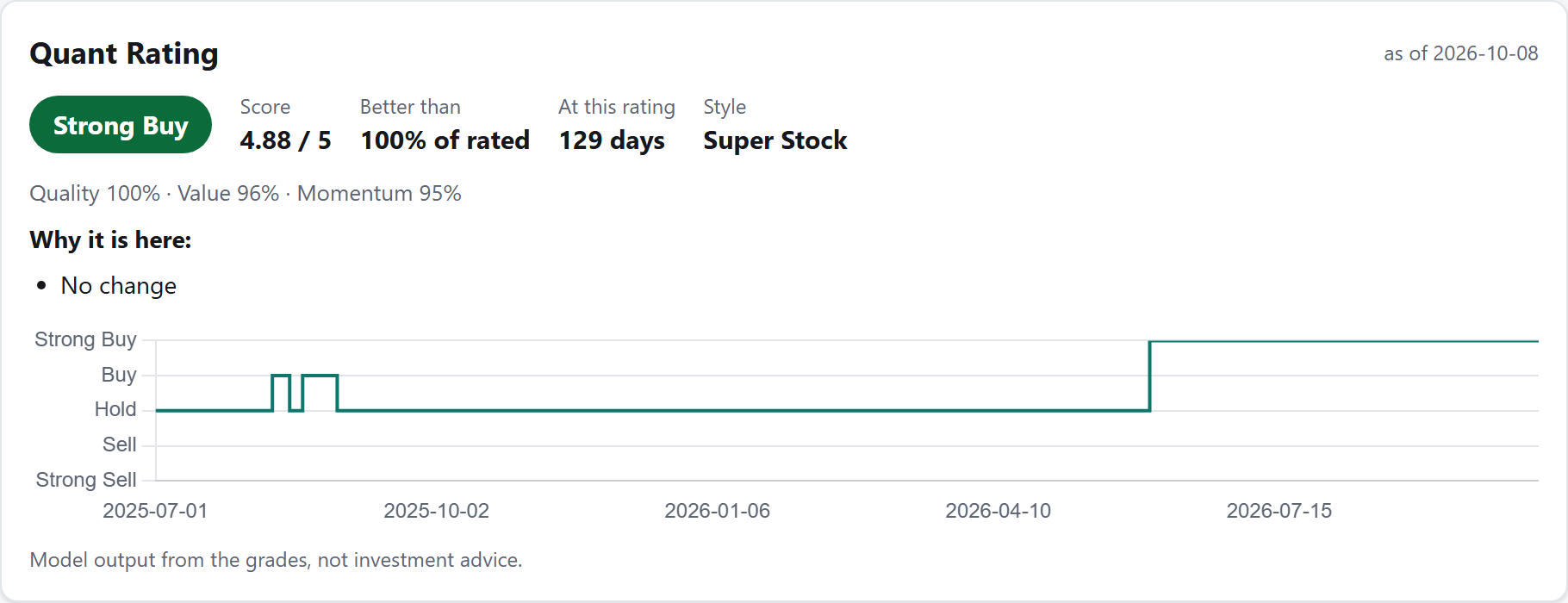
- Why our model selected it: Strong Buy since June 1, 2026 (122 days), with a rating score of 4.88 out of 5, higher than 99.98 % of rated stocks. It is #1 of 26 rated companies in our Oil & Gas Midstream group. It has a "Super Stock" profile, around the 96th percentile on quality, value and momentum alike.
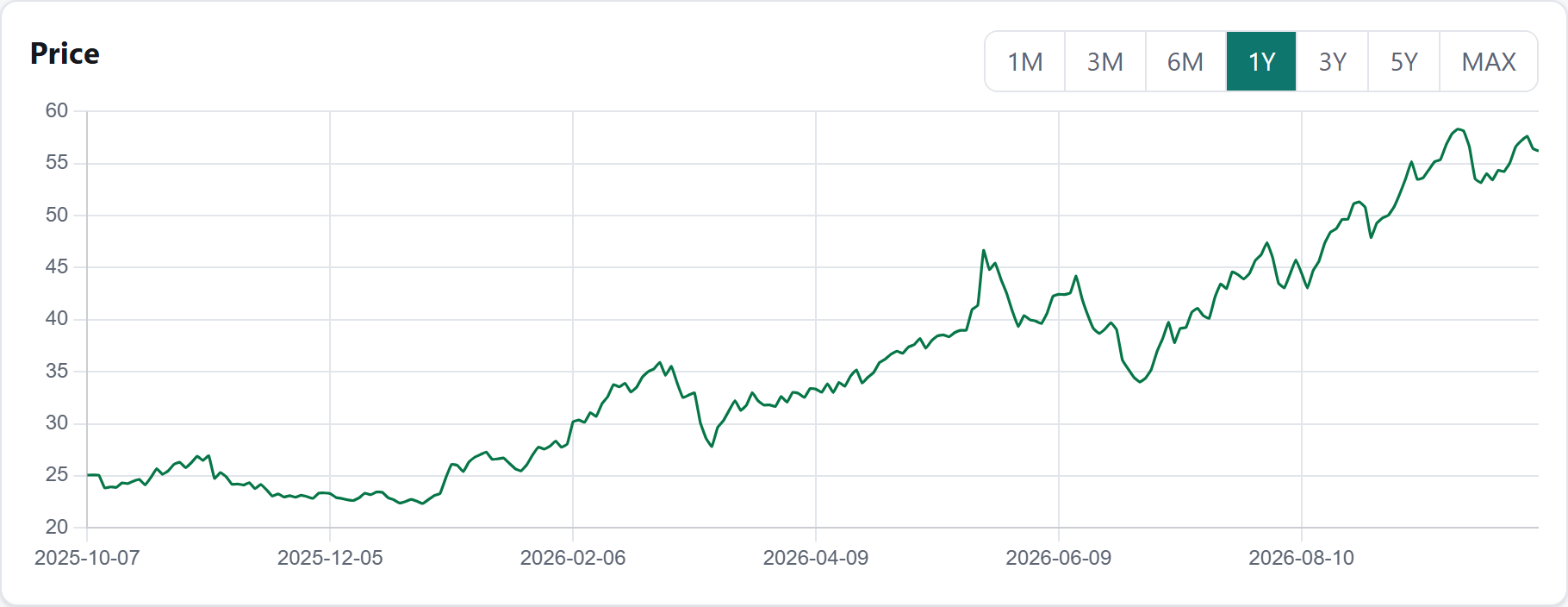
- Key numbers: trailing P/E 7.2, forward P/E 7.5, EV/EBITDA 6.4; operating margin 57.6 %; ROIC 22.4 %; net debt 0.7x EBITDA. The shares rose 114 % over the year, against 15.5 % for SPY.
- Latest quarter: in fiscal Q1 2027 (April–June 2026), net income was $138.3 million ($3.24 per diluted share), against $10.1 million a year earlier (Business Wire).
Company and industry
Dorian has a single business line: chartering out its VLGCs. About 99 % of its fiscal 2026 revenue (April 2025–March 2026) came through the Helios Pool, its joint venture with MOL Energia, which is part of Mitsui O.S.K. Lines (10-K). So the figures that matter are fleet days and the daily rate earned (TCE). Fiscal 2026 revenue rose 36 % to $481.5 million and net income doubled to $193.7 million. Then, in April–June 2026, revenue jumped 123 % to $187.9 million and the fleet earned $75,926 a day, a company record (Investing.com).
The closure of the Strait of Hormuz cut Middle East LPG loadings by more than 70 % in that quarter (earnings call). Asian buyers switched to US Gulf cargoes, which make much longer voyages, and the US share of seaborne LPG exports rose to about 65 %, from under 50 % a year earlier (Motley Fool transcript). That suits an owner whose ships load mostly in the US Gulf. Rates were still high just before the pick: the Baltic VLGC benchmark stood at about $242 per tonne in late September (Optima Shipbroking).
Our Oil & Gas Midstream group mixes pipeline companies with three gas shippers, and all three shippers are rated Strong Buy. The group ranks 26th of 123 industries on our trend measure. Over six months, though, its median stock trailed SPY by 12 points: the pipelines have not shared in the shipping boom. Dorian's 12-month return of 120 % (to one month before the pick) compares with medians of 32 % for the industry, 34 % for energy and 14 % for the market.
Why it stands out from its peers
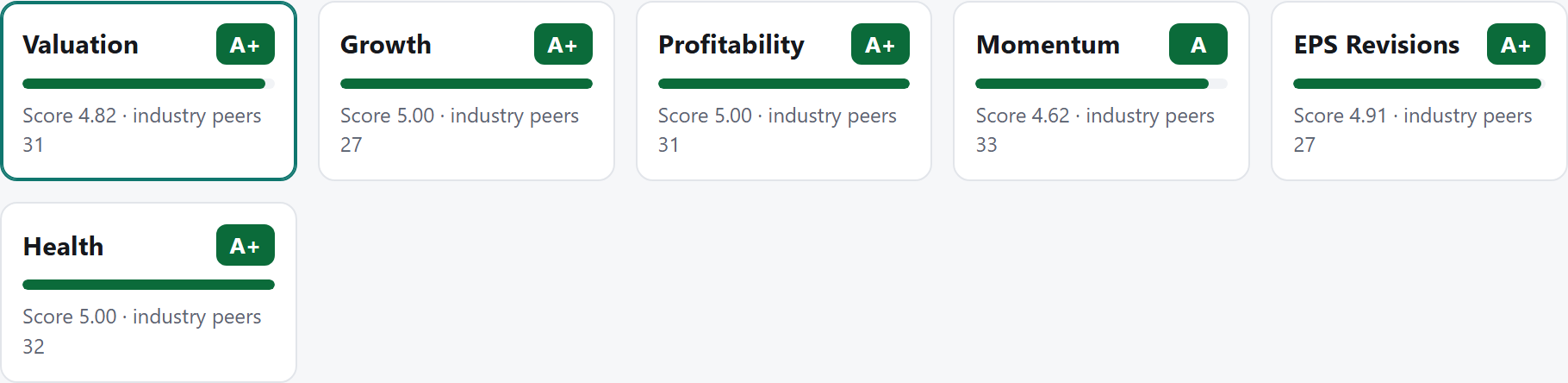
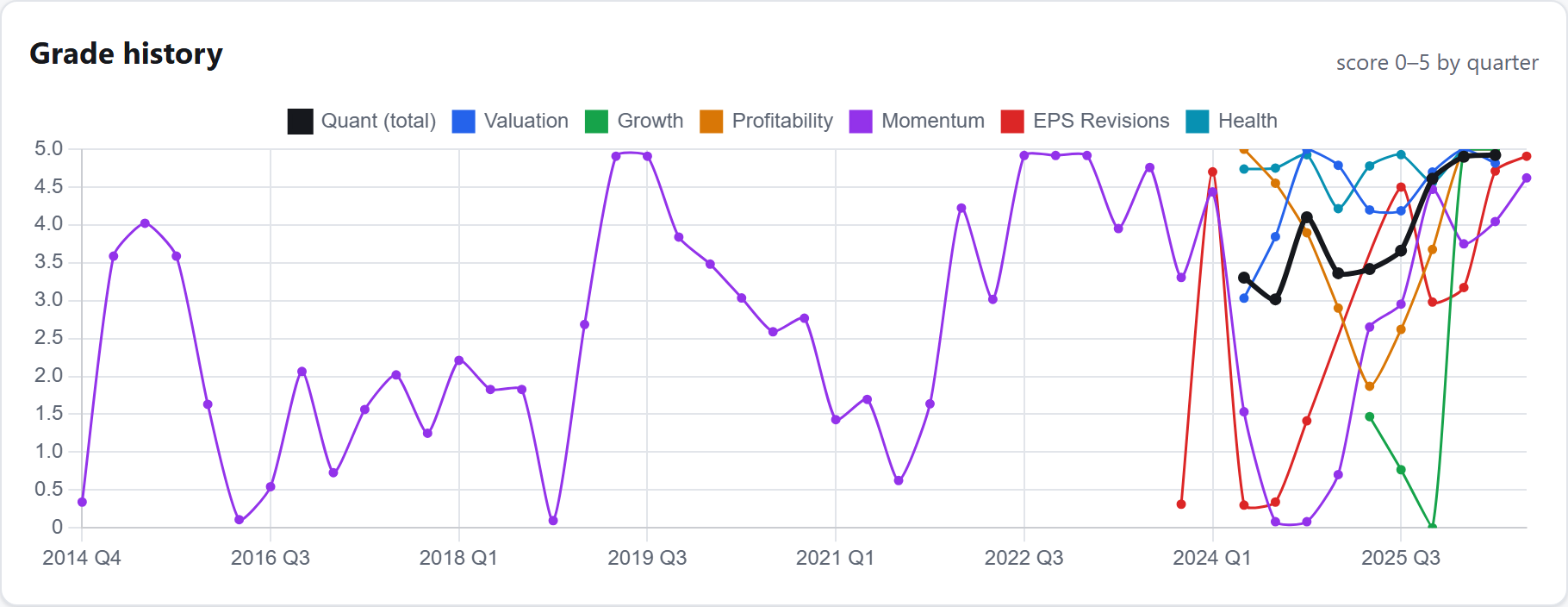
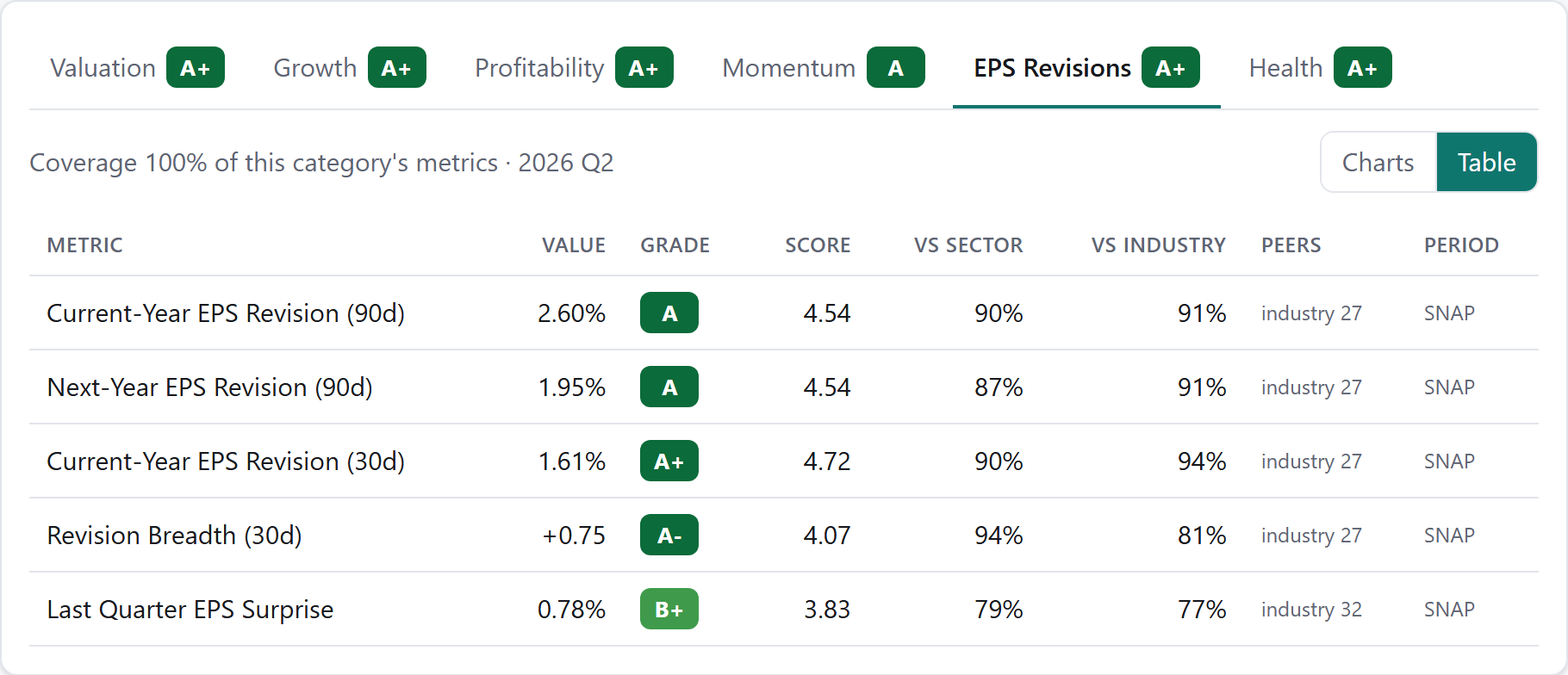
Dorian has the highest rating score in its group, ahead of CMB.TECH (4.44) and BW LPG (4.43). Most of the large pipeline companies are rated Hold or Sell. Against 27–33 peers it ranks at the 100th percentile in Profitability, Health and Growth, the 96th in Valuation, the 98th in EPS Revisions and the 92nd in Momentum.
The main business reason is operating leverage. Vessel costs are largely fixed, at about $10,356 per ship per day last quarter. When the daily rate nearly doubles, almost all of the extra revenue becomes profit. The modern, fuel-efficient fleet adds to this: scrubbers and LPG dual-fuel engines saved money when bunker fuel was expensive (Yahoo Finance). About 80 % of the Helios pool's ships trade on the spot market, so higher rates came through quickly. Visibility is good: in early September Dorian said about 99 % of its July–September 2026 days were already fixed at more than $88,000 a day, above the record April–June quarter (8-K summary).
Strongest metrics
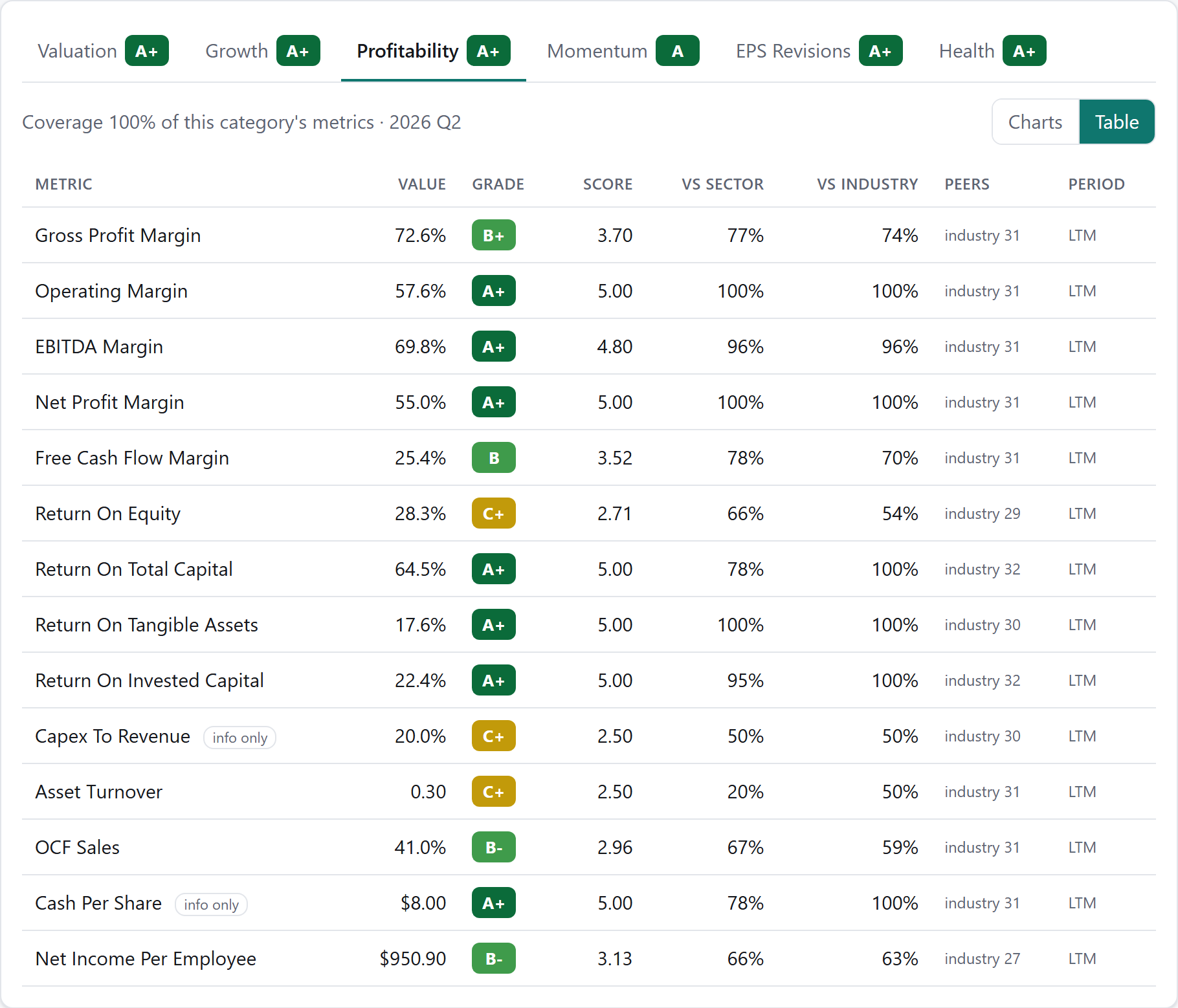
Profitability (A+, 1st of 31). Operating margin 57.6 %, net margin 55 %, ROIC 22.4 % and return on tangible assets 17.6 % all rank first, all straight from the rate environment. One caution: April–June included a $30.1 million gain on a ship sale, which flatters trailing margins.
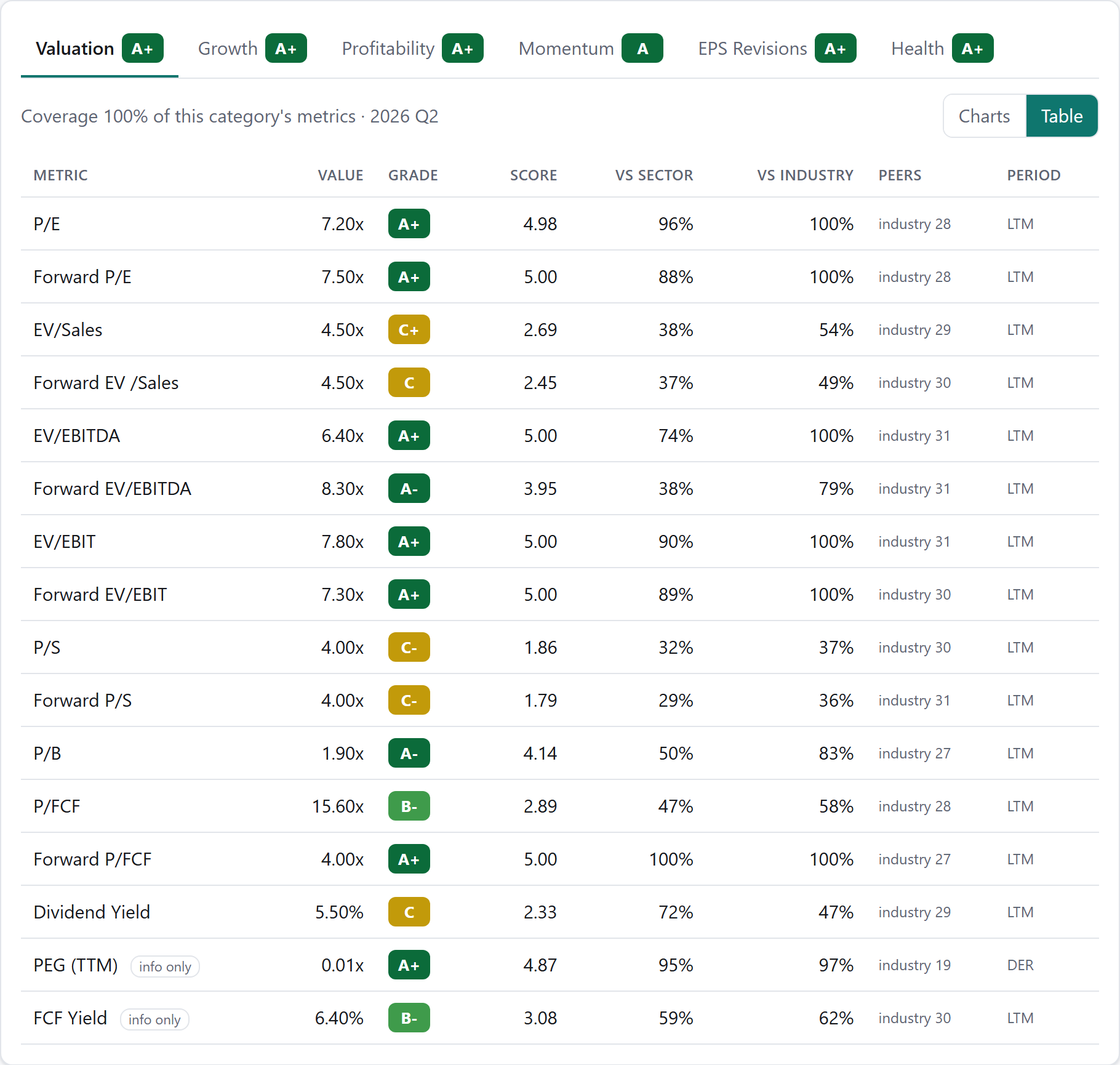
Valuation (A+). Trailing P/E 7.2, forward P/E 7.5, EV/EBITDA 6.4, EV/EBIT 7.8 and forward price-to-free-cash-flow 4.0 all rank first. The market is pricing today's earnings as a peak, which is reasonable for shipping. That also leaves room for upside if rates stay high for longer.
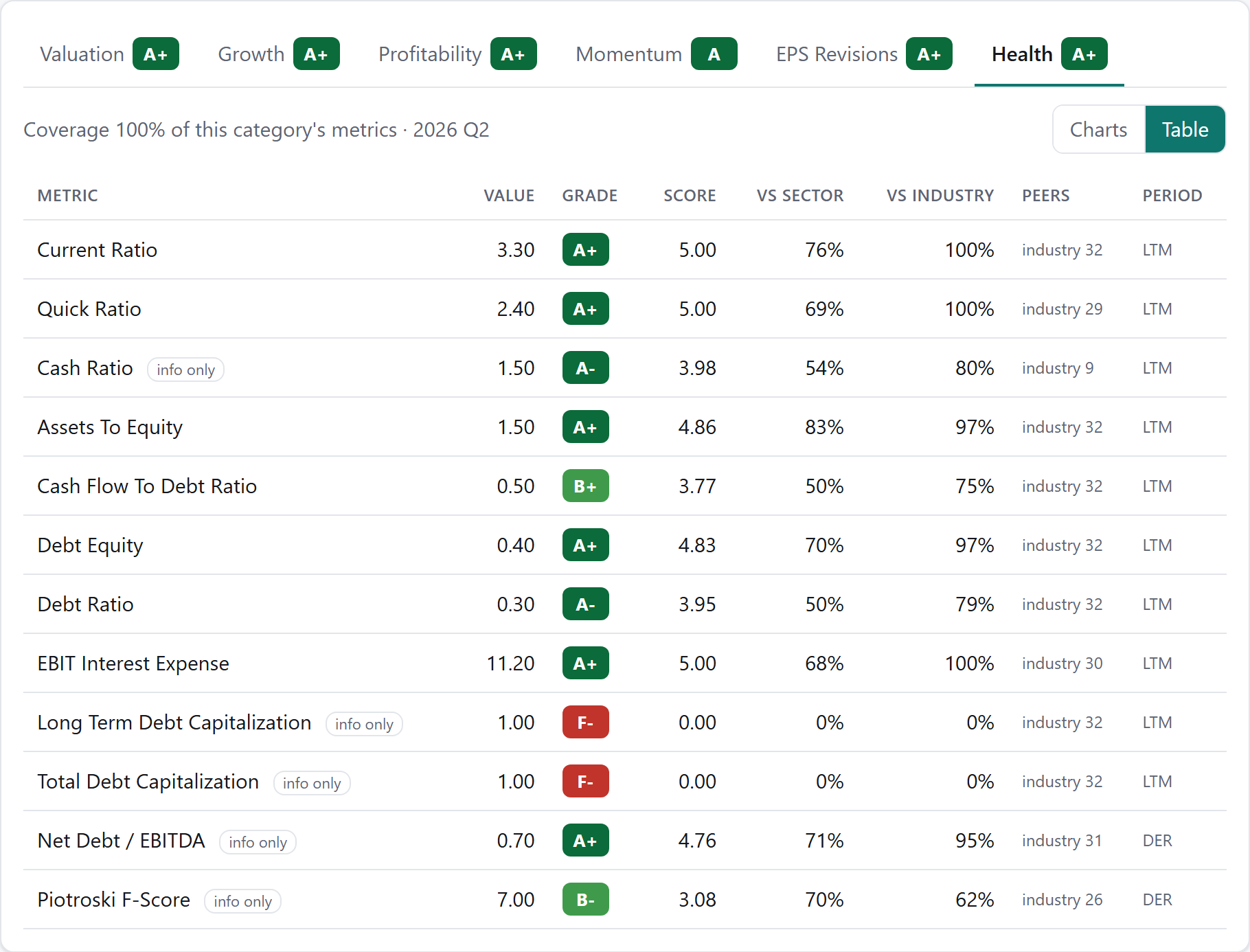
Health (A+, 1st of 32). Current ratio 3.3, quick ratio 2.4, EBIT covering interest 11.2 times, and net debt 0.7x EBITDA. After the ship sales the company reported nearly $600 million of cash and debt at 29 % of capitalisation.
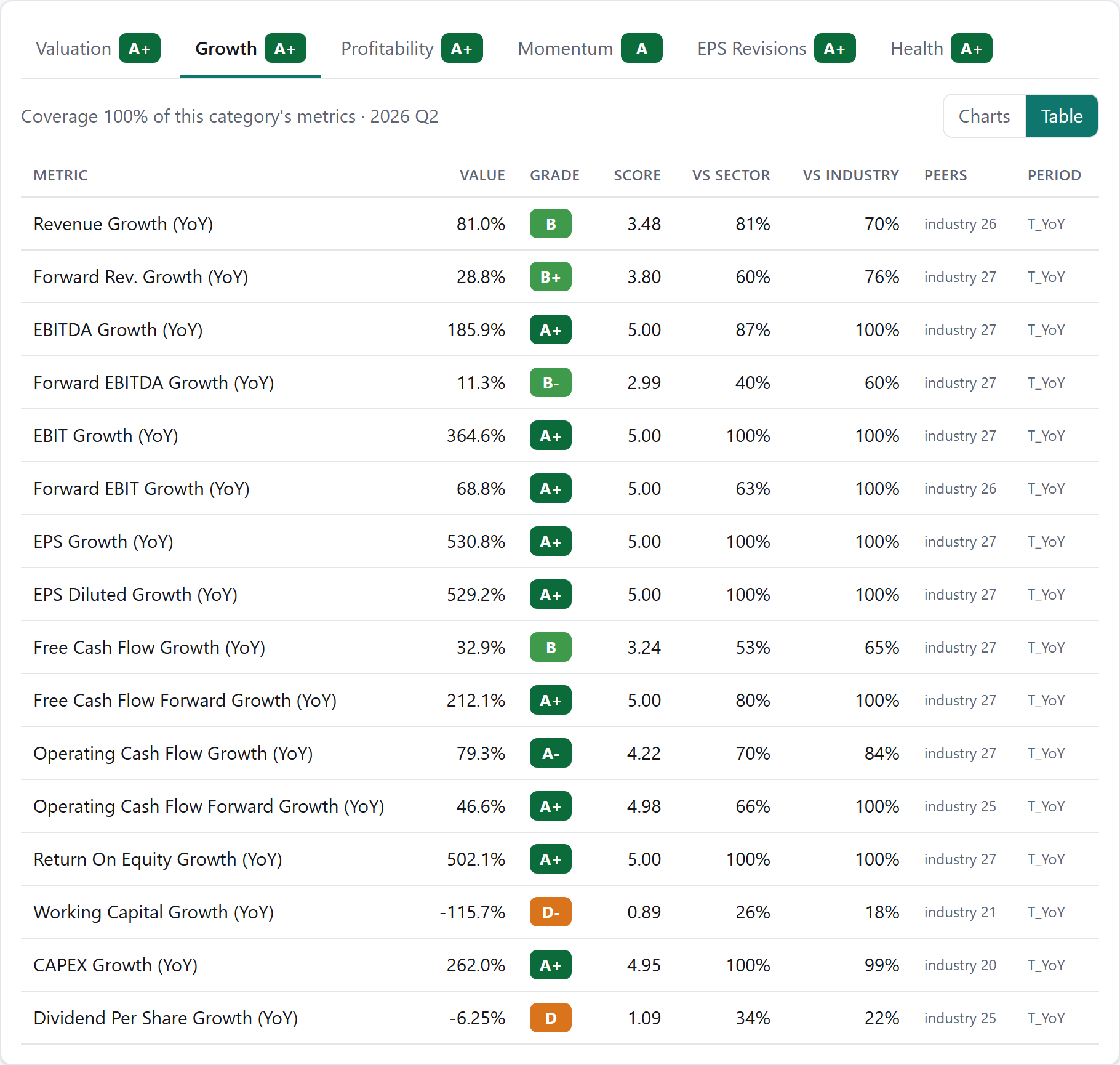
Growth, EPS Revisions and Momentum. Year-over-year EPS rose 531 %, EBIT 365 % and EBITDA 186 %. Analysts raised this year's EPS estimate by an amount equal to 2.6 % of the share price over 90 days, with 75 % of revisions pointing up. The April–June result of $2.52 adjusted EPS beat the $2.25 consensus. The stock sits at 96 % of its 52-week high.
Weak points
- Sales multiples: P/S of 4.0 (C-) and EV/Sales of 4.5 (C+) show that the case rests on unusually high margins.
- Dividends: a 5.5 % yield is only average next to yield-heavy pipeline partnerships. The dividends are irregular by design, the latest being $1.00 per share in August, and they move with the freight market.
- Cash conversion: free cash flow margin (25 %, B) and operating cash flow to sales (41 %, B-) lag the earnings metrics, partly because of fleet reinvestment and gains on ship sales.
- No economic moat: over 10 years, median ROIC was 6.3 % against a 9 % hurdle, with three loss years. Today's returns are a cyclical peak.
- Insider selling: six insiders sold and none bought in the last 90 days. The CEO still owns about 13.5 %.

Risks
- Peace risk: record rates depend on the Hormuz disruption. Management called the mid-June US–Iran ceasefire memorandum fragile. A full return of Gulf flows would shorten voyages and cut rates.
- New ships: about 155 VLGCs and ammonia carriers are due by 2030, around 36 % of the existing fleet. Even before the crisis, Drewry expected fleet growth to peak in 2027 (Drewry).
- Concentration: Dorian operates only in the VLGC segment, with no other business to fall back on.
- Costs and policy: bunker fuel and Panama Canal costs, possible IMO climate rules and Chinese trade policy can all change LPG trade routes and margins.
- Volatility: annualised volatility is about 42 %, and shipping stocks often price in the peak in rates before it shows in earnings.
Summary
Our model selected Dorian LPG because it scores at the top of its peer group in nearly every category we grade. It has first-in-industry margins and returns, about $600 million of cash, rising estimates and a price of about 7x earnings. Behind the numbers are a modern fleet, high spot exposure through the Helios Pool, and US Gulf exports that lengthened voyages after Hormuz closed. The July–September quarter is already fixed above $88,000 a day. The main risk is that these earnings rest on a geopolitical disruption, with a large wave of new ships coming from 2027. It is best seen as a cyclical holding with exceptional current numbers, not a long-term compounder.
Sources
- SEC
- Business Wire
- 10-K
- Investing.com
- earnings call
- Motley Fool transcript
- Optima Shipbroking
- Yahoo Finance
- 8-K summary
- Drewry
Disclaimer. This report explains why the Quant AI Picks model portfolio selected this stock. It is model output and general commentary prepared from public data and our quantitative grades; it is not personalised investment, tax or legal advice and not a recommendation to buy or sell any security for any particular person. Top Picks is a rules-based model portfolio with no real money. Data and sources may contain errors or be out of date; facts from third parties were not independently verified. Past performance and backtested or simulated results do not guarantee future results; investing involves risk, including loss of principal. Consider your own objectives and situation, and consult a licensed adviser before investing.